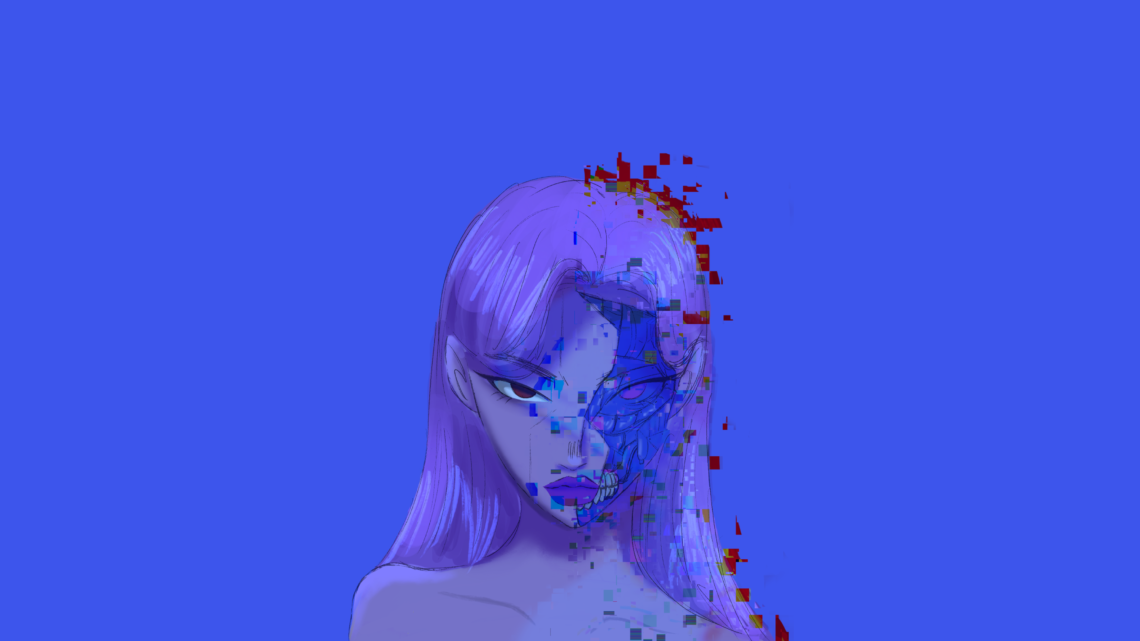
Artificial Intelligence: The Distortion of Our Sense of Reality and Our Loss of Freedom
Nowadays, our senses are being altered, and are in a constant limbo of what is real and what is not. This distortion of our senses, and thus reality, is unfolding because of Artificial Intelligence (AI). AI can generally be understood as “technology that enables computers to perform tasks requiring human intelligence, such as recognition, reasoning, and decision-making” (Erasmus University Rotterdam, n.d.). More specifically, Generative AI (Gen AI) is a type of artificial intelligence capable of actively creating new content – such as text, images, music, or videos – based on the data it was trained on” (Erasmus University Rotterdam, n.d.).
Currently, AI is is becoming incorporated in many facets of people’s lives, ranging from websites, customer service assistants, translator engines, cars, and even washing machines. Oftentimes people are unaware it is incorporated in the technology they are using and do not even consent to using it. Humanity has entered an era of continual questioning of our senses. How can we sense whether something is real or AI-generated? How are our human senses going to adapt to this new definition of what real is? In what new ways can we sense and define reality more broadly?
As AI becomes increasingly embedded in society, different philosophical perspectives are taking more solidified stances towards this issue. Washington (2023) explains that positivists purport that AI embodies the objectivity in science and data which they seek to achieve. From a positivist lens, AI is reshaping reality into one free from human biases and error, therefore creating a more just and equitable society.
On the other hand, for Washington, constructivists see AI as subjective because it is built through human data and knowledge, which is inherently subsumed to subjective values, contexts, and cultures. From Washington’s perspective there are also transformative and decolonial lenses, which view AI as a stronghold to continue perpetuating inequality and injustice.
For these groups, AI reshapes reality into one where disparities and uneven power are emboldened. While these philosophical perspectives greatly vary from each other one thing is certain for all of them: AI is changing how humans sense, feel, and experience reality.
Arguably, even though AI has produced multiple effects and changes, the most striking outcome is that aforementioned distortion of our sense of reality. Notably, the content people consume everyday can now be split into two categories.
The first being content which is real and created by humans, and the second is AI-generated content. When examining AI-generated content, the sheer volume and range of it is astounding. That alone, is a distortion of reality, as AI infiltrates all forms and types of content and is increasingly used. Moreover, AI is ever-changing and these huge volumes of content that it is producing are evolving becoming hyper realistic.
It is becoming exponentially harder to understand the difference between user and AI generated content. On social media, there are even challenges where people try to guess whether content is AI- or human-made. What is most striking is that the majority of people struggle and fail these challenges. The extent of reality distortion through AI can also be conveyed more tangibly. A study on AI media concluded that exposure to such content can lead to false memories and more broadly distort human recollection capabilities (Pataranutaporn et al., 2024).
Another way in which AI is distorting our sense of reality is through a kind of cognitive magnification, whereby people gravitate towards overconfidence through the use of AI (Fernandes et al., 2026). While increased confidence might sound like a good thing, overconfidence can lead to increased risks in high-consequence situations such as surgery (Nosta, 2025).
Within this increased distortion of our sense of reality that is happening through AI, one of the most substantial changes taking place is in the production of art. Art history acknowledges the process of making art as one of transmission: art represents bits of the human experience through one’s eyes that others can in turn project their own subjectivities and interpretations onto (Reinhart, 2025). Art is a form of connectivity amongst humans and a means of building community (Lauchaud & Neveux, 2009). Afterall, art has consistently played a role in questioning the status quo and instigating social change (Lauchaud & Neveux, 2009).
This is a result of the fact that art is not a product but an experience that engages with one’s preconceptions and pushes them to think in non-conventional ways (Jain, 2023). In engaging with artworks, people respond not only to what they can see, but to its underlying meanings (Jain, 2023). Thus, this creates new forms of connectivity amongst people and new imaginaries of the future.
As the production of diverse forms of art is being permeated by AI, this translates to a substantial loss of human freedom. This turn can be understood through Arendt’s (1951) philosophical theorizations on how totalitarianism functions. Although Arendt’s (1951) work dates back to almost eighty years ago, it remains urgently relevant today, as she discusses post-truth, the rise of populism, statelessness.
These are contemporary issues, and though her descriptions of events date so far back, they are a mirror of current events. Her understandings provide a useful framework through which the current state-of-affairs can be analysed. For Arendt (1951), totalitarianism aims to collapse individual thought and control every aspect of one’s life. To achieve this, it is crucial to erode any sense of truth and banalize evil (Arendt, 1951). As art history indicates, art has functioned like a pioneer of critical thinking. Therefore, the permeation of AI in the arts is a step further towards this loss of our ability to think as individuals and in subversive ways, since one can no longer even know whether what they are perceiving is real.
Further, AI-generated art often takes on kitsch aesthetics, traditionally associated with fascism, and promotes paintings which humorize and normalize harmful ideologies, such as with lone wolf paintings (Field, 2025). Such forms of art additionally point to Arendt’s (1951) argument that for totalitarianism to function, it needs to foster a sense of loneliness, as a means of stopping potential for gatherings and critical thought exchanges. Fostering a sense of loneliness and conveying it as a reality is a key effect of AI.
The mechanization of art removes the elements of connectivity and community-building which make art revolutionary (Reinhart, 2025). Thus, AI art may lead to an increase in feelings of loneliness. This active promotion of loneliness through AI is especially visible in AI-generated paintings regarding the manosphere, such as the aforementioned lone wolf paintings.
There is a final important point to discuss about the mechanization of art and loss of freedom. While AI is often framed as a tool for the democratization of knowledge, it is actually a tool of privatization. AI allows for the privatization of art and its consolidation in the hands of billionaires such as Elon Musk (Reinhart, 2025). This further entrenches fascism and right-wing ideologies in different art forms because these are fundamentally tied to billionaires’ agendas (Poruthiyil, 2021).
In a context of waring sense of reality, this is particularly menacing as it can substantially alter what people believe is happening in actuality, how current events are perceived, and sway people in a harmful direction. Again, a poignant example of AI contributing to altering people’s sense of reality towards a harmful direction is the manosphere. Furthermore, a notable question to ask is if billionaire tools produce art, and entrench fascist aesthetics in it, what will that mean for how reality is experienced in the future?
Overall, AI has substantially altered our sense of what can be considered as real or not. This is especially harmful in the field of art, because art is a tool of resistance. Now art is mechanized to promote fascist agendas and alter our perceptions of the world. As AI increasingly permeates all facets of life, people must start questioning the effects of this altered sense of reality, find new ways to build community, and fight the mechanization of their lives.
References:
Erasmus University Rotterdam. (n.d.). What is AI? Retrieved from https://www.eur.nl/en/about-university/vision-strategy-2030/aieur/what-ai
Fernandes, D., Villa, S., Nicholls, S., Haavisto, O., Buschek, D., Schmidt, A., Kosch, T., Shen, C., & Welsh, R. (2026). AI makes you smarter but none the wiser: The disconnect between performance and metacognition. Computers in Human Behaviour, 175, 108779.
Field, S.-J. (2025). Kitsch, the apparatus and a dead theorist. Technoetic Arts : A Journal of Speculative Research, 23(2), 237–253. https://doi.org/10.1386/tear_00150_1
Jain, N. (2023). The war on human creativity: #275 on studio ghibli and AI, art and content, and things that will destroy society (not hyperbolic at all). Retrieved from https://sneakyart.substack.com/p/275
Lachaud, J.-M., & Neveux, O. (2009). Arts and revolution: On some theoretical and practical elements. Actuel Marx, 45(1), 12-23. https://doi.org/10.3917/amx.045.0012.
Nosta, J. (2025). The AI reality distortion field: Science shows AI inflates confidence faster than it improves ability. Retrieved from https://www.psychologytoday.com/us/blog/the-digital-self/202511/the-ai-reality-distortion-field
Pataranutaporn, P., Winson, K., Peggy, Y., Lapapirojn, A., Ouppaphan, P., Lertsutthiwong, M., Maes, P., & Hershfield, H. (2024). Future you: A conversation with an AI-generated future self reduces anxiety, negative emotions, and increases future self-continuity [Unpublished manuscript]. Department of Computer Science, Cornell University.
Poruthiyil, P. V. (2021). Big business and fascism: A dangerous collusion. Journal of Business Ethics, 168(1), 121–135. http://www.jstor.org/stable/45386699
Reinhart, E. (2025). The trouble with AI art isn’t just lack of originality. It’s something far bigger. Retrieved from https://www.theguardian.com/commentisfree/2025/may/20/ai-art-concerns-originality-connection
Washington, J. (2023). AI and philosophy: Exploring the complex relationship between worldviews and technology development for an inclusive and ethical future. SSRN Electronic Journal, 1-11.

Erato Vaitsi is a first-year student in the Research Master International Development Studies at the University of Amsterdam. She completed her Bachelor’s in Political Science at Leiden University. Outside of her studies she enjoys contortion and language learning.

Taylor Brunnschweiler is a third year studying European Languages and cultures at the University of Groningen. Other than languages, she enjoys cosmetology, illustration and graphic design in general.