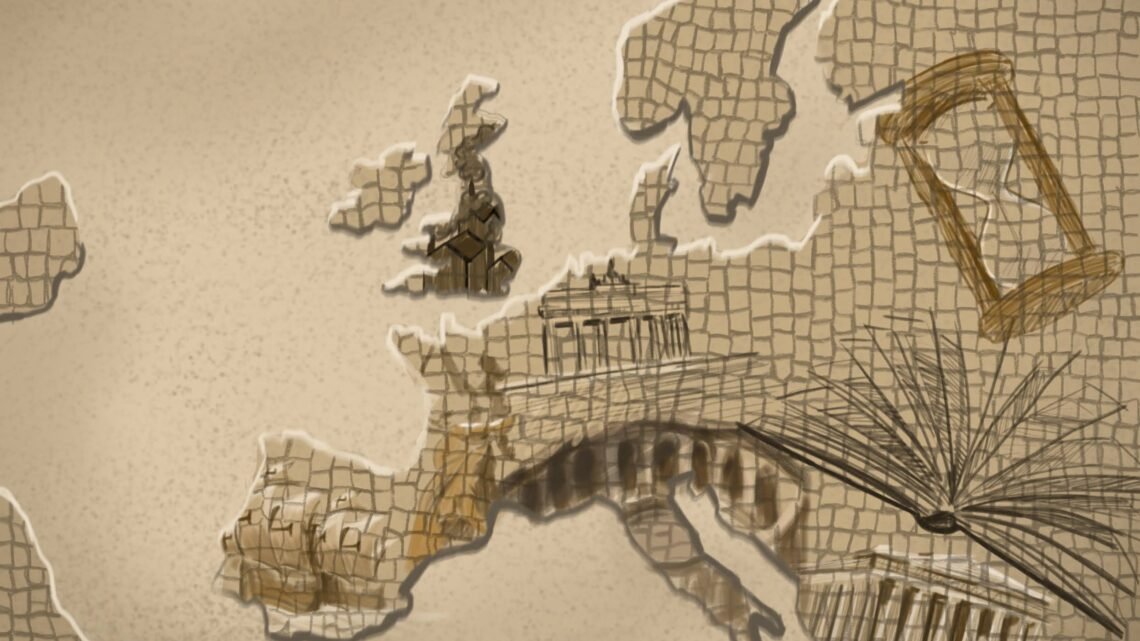
Hard Times and Ends of Eras
Thirty-seven years after its initial publication, The End of History remains the sleep paralysis demon of any history enthusiast, political science student, or smug teenage contrarian. In 1989, American political science scholar Francis Fukuyama argued that “something very fundamental has happened in world history”: alongside the conclusion of the Cold War, Western liberal democracy emerged as “the final form of human government,” and this victory would have practical implications for the shifts in governance worldwide (Fukyama, 1989, p. 1). While Fukuyama drew on the ideas of G. W. F. Hegel and (to a lesser extent) Karl Marx to make his point, those predecessors of his ideated about the end of history as a goal to strive towards, something they could imagine but not yet hold in their hands; contrastively, Fukuyama believed that the world now had a firm grasp on the end of history and that while the process of liberalization might not be smooth or linear, from that point forward, all states were going to begin their transition to the Western liberal democratic model as it has proven itself most effective, economically, socially and ethically (Fukuyama, 1989).
Just like that, The End of History emerged as a framework beyond theoretical speculation meant for philosophy seminars and became the definitive kitchen-table political philosophy of that era, both in the already established and freshly forming states of the Global West. In the U.S.-American block of influence, it signified that the turn of the century would bring with itself a more peaceful future—because, despite what TV screens, TikToks and online advertisements might be telling us these days, most people yearn for less war, not more of it. For those living in the former Soviet bloc, it was a promise of an idyllic, peaceful future in which they, too, could participate in the wonders of liberalism at which they could only peek through the Berlin Wall for years prior.
The end of history theory is now viewed with pity at best and outright animosity at worst. Finding a place on Earth where democratic values and the rule of law are not threatened would require a magnifying glass, and even then, chances are that the lack of such a threat comes from the fact that those ideals were never implemented there in the first place. What’s more, it took approximately ten years for writers to start describing any significant world events as history “returning”: from the war on terror to the increasing role of China in the theatre of politics, searching the phrase return of history on the Internet presents the curious researcher with a variety of perspectives on which global shift put a definitive end to Fukuyama’s dreams of victorious Western liberalism. In 2022, Christian Breuer claimed in an editorial for Intereconomics that history has returned with Russia’s invasion of Ukraine (Breuer, 2022). Compared to his contemporaries, Breuer dates the return of history surprisingly recently, which begs the question: who gets to decide when history, as well as periods within it, begin and end?
Critical approaches to history and historiography problematize the concept of periodization, or categorizing temporal categories of the past into broad, presumably universal historical periods. While these discussions were present in historiography throughout the ages, the subject became particularly salient during the temporal turn, as a result of which historiographers zoomed out the lens on their analyses of historical periods and began considering how they arrived at the classification of those periods in the first place. As it was succinctly put by Johann Gustav Droysen: In history there are no epochs just as the lines of the equator or of the tropics are not in the world. They are only forms of observation, which the thinking spirit gives to the empirically existent (Ebke and Haack, 2025, p. 309).
No observation can be detached from the person observing, and those observing history to put it into neat boxes tend to share characteristics. We’ve all heard the quote, ironically enough misattributed to Winston Churchill, that history is written by the victors, but the positionality of historicization (and, by extension, periodization) goes beyond this; a few minutes of self-socratizing will unquestionably lead anyone interested in history to begin questioning everything they might have taken for granted about the boxes into which we place historical events (Phelan, 2019). To what extent does dividing time based on reigns of particular rulers actually reflect changing conditions in a state? Why do we refer to the period which gave us cathedrals, astronomical clocks and the basis for calculus as the dark ages? How could a political scientist preach the victory of Western liberalism when an ethnic cleansing was happening on the very continent where this marvelous shift was meant to start (Smith, 2026)?
German historian Achim Landwehr understands periodization through the lens of the constant re-creation of the concept of modernity—a concept the justification of which necessitates declaring an end to some pre-modern reality (Landwehr, 2024). We divide and conquer history by looking back, deciding we have now moved past a certain set of ideas and beliefs, and devaluing them in comparison to our newfound, enlightened modern period. We continue forward until those who come after us decide that it is now our turn to carry the pre-modern label; we rinse and we repeat. Over time, the graveyard of our hopes of finally having achieved the ever-elusive modernity becomes a table of contents in history textbooks.
This particular historiographic tendency conveniently transfers over to our understanding of politics: if there’s a phrase that politicians and journalists alike love to use, it’s the end of an era. Offering a clean slate is a venerated communication strategy: political communication is, after all, an act of selling a narrative, and narratives thrive on contrast. Periodization of history usually happens many years after a certain period has ended—for instance, more than one world war is needed to say that one of them was the first—but this form of communicating with the public takes away the labor of future historians and puts it in the hands of campaign managers.
The language of clean breaks—end of an era, out with the old, in with the new—implies drastic and relatively immediate change, which is usually practically unfeasible in the infinitely layered reality of policymaking. Raudla et al. (2024) looked into the temporality of policymaking in the context of policy experiments, and arrived at the bleak conclusion that time (or rather: temporality) is not a friend of meaningful policy. The authors point out that the rapidly shortening media cycle creates an environment of urgency on any matter related to politics: “the growing mediatization of politics means that the media attention amplifies the societal gaze under which political actors move and it forces political actors to take decisions more quickly” (Raudla et al., 2024, p. 140). Electoral cycles play into this as well, on the one hand providing natural endpoints to eras of governance, on the other crafting the illusion that policies coming into effect at a particular point in time are the effect of the work of whoever is currently in charge and not the long-term planning of their predecessors. As a result, the political space is hostile toward policy experiments: some politicians give up on experimenting with policy altogether out of consideration for their ending electoral term, and most prefer their policy experiments to be as short as possible and often do not take the appropriate time to reflect on their results and implement changes. This, in turn, stagnates our ability to dream of political futures beyond what can fit in an electoral cycle or a news headline: how are we meant to genuinely end faulty eras if we do not give ourselves enough time to imagine meaningful alternatives
There are some clichés that happen to be both rhetorically effective and true; unfortunately, none of the elegant phrases about the nature of endings meet these criteria. Despite these difficulties, endings continue to haunt our consciousness and our academic disciplines, from historiography and political theory to policymaking. It is, perhaps, the human condition to try to draw clear lines between ourselves and everything we think of as preceding us; nevertheless, it might be kinder and more reasonable, toward ourselves, our predecessors and our descendants, to smudge those lines a little.
References:
Breuer , Christian. 2022. “The New Cold War and the Return of History.” Intereconomics 57 (4): 202–3. https://doi.org/10.1007/s10272-022-1056-3.
Ebke, Almuth, and Christoph Haack. 2024. “Periodisation and Modernity: An Introduction.” History of European Ideas 51 (2): 1–14. https://doi.org/10.1080/01916599.2024.2373542.
Fukuyama, Francis. 1989. “The End of History?” The National Interest, no. 16: 3–18. http://www.jstor.org/stable/42897318.
Landwehr, Achim. 2024. “Modern Times: A Construction Manual.” History of European Ideas 51 (2): 364–79. https://doi.org/10.1080/01916599.2024.2373546.
Phelan, Matthew. 2019. “‘History Is Written by the Victors.’” Slate Magazine. Slate. November 27, 2019. https://slate.com/culture/2019/11/history-is-written-by-the-victors-quote-origin.html.
Raudla, Ringa, Külli Sarapuu, Johanna Vallistu, and Nastassia Harbuzova. 2024. “It Is about Time! Exploring the Clashing Timeframes of Politics and Public Policy Experiments.” Perspectives on Public Management and Governance 7 (4). https://doi.org/10.1093/ppmgov/gvae008.
Smith, R. Jeffrey. 2024. “Srebrenica Genocide | Facts, History, Map, & Photos | Britannica.” In Encyclopædia Britannica. https://www.britannica.com/event/Srebrenica-genocide.


Helena Nascimento is a Brazilian student journalist studying Communication Science at the UvA. She has always been passionate about art, which led her to becoming an illustrator for Inter.